Tuna Casting Rod Selection Explained
Selecting the correct rod for Atlantic bluefin tuna casting is not simply a matter of choosing the stiffest blank available. In stand-up tuna fishing the rod becomes part of a larger pressure system that includes the reel, line, drag setting and the angler’s ability to maintain control under load. The objective is balance rather than maximum rigidity.
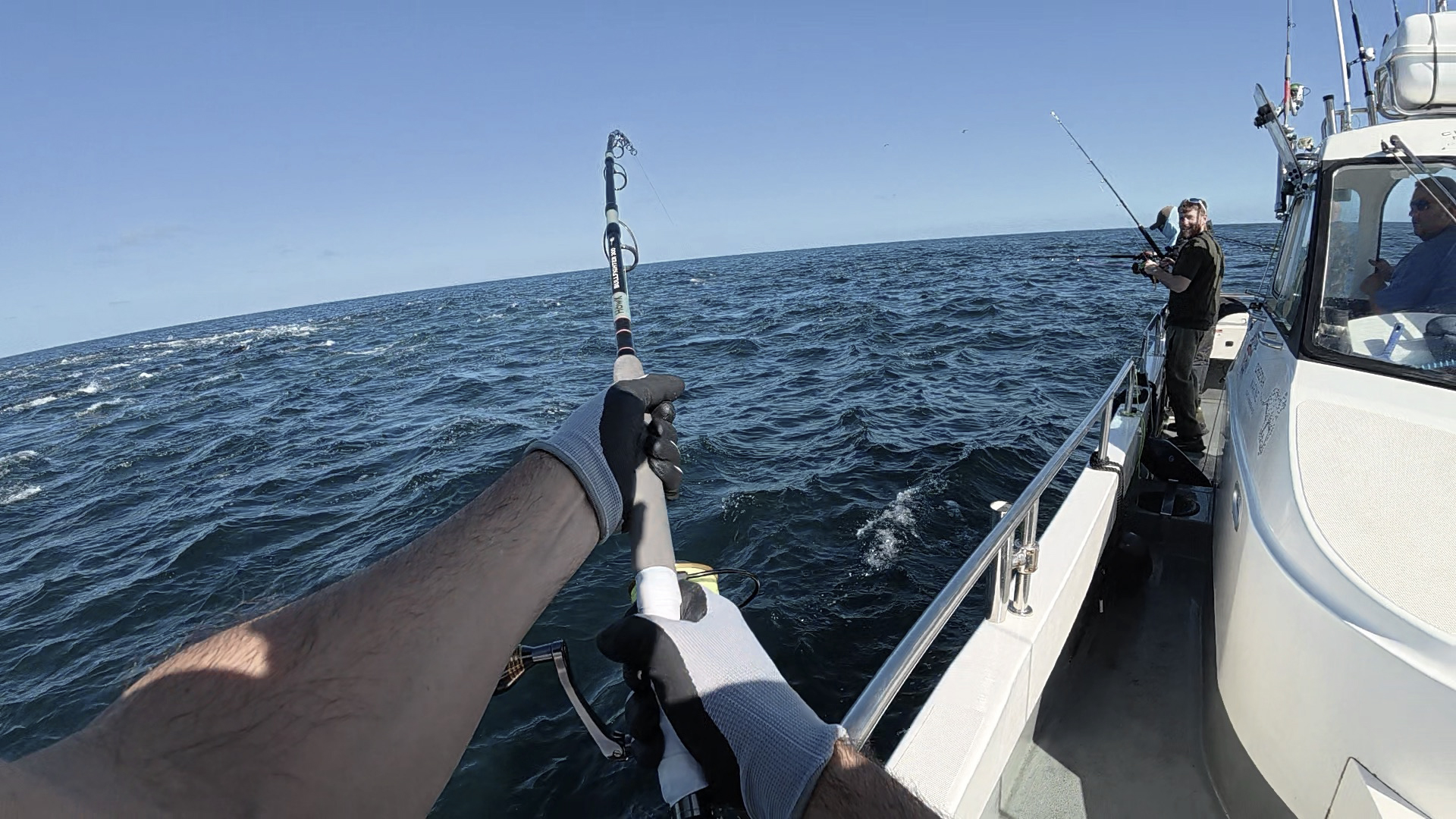
Modern bluefin casting rods are typically rated using the PE line classification system. In the UK fishery most setups fall between PE8 and PE12, reflecting the strength of braid used and the drag pressures that can be applied safely. These rods are designed to cast large surface lures in the range of roughly 130 to 200 grams while retaining the structural strength required to fight powerful fish on sustained drag.
High-load casting rods such as those produced by Truth and CB One are built specifically for this application. Their blanks are designed to carry heavy drag pressure without collapsing while still retaining enough flex to protect braid and maintain hook security during violent head shakes. This balance between strength and controlled flex is what allows modern tuna casting tackle to function effectively.
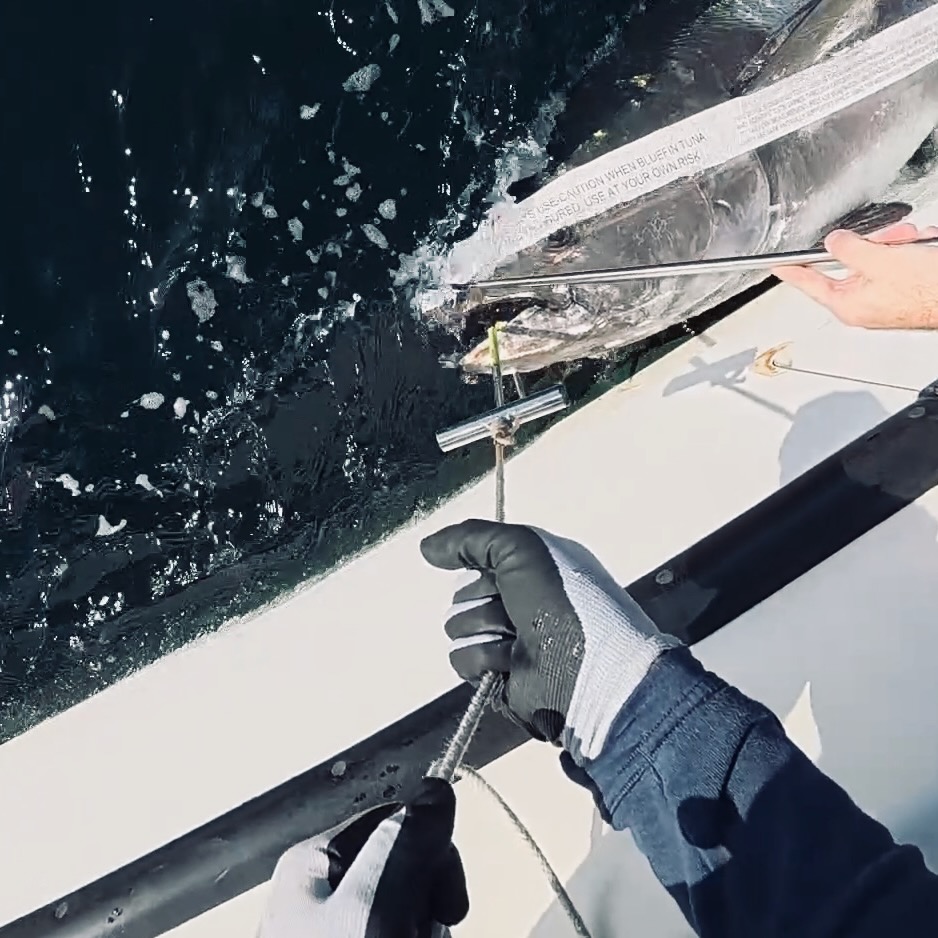
Rod action becomes particularly important during the later stages of the fight. Once a bluefin tuna moves beneath the boat and begins circling in the final phase of the fight, the rod is required to perform repeated lifting cycles as the angler gradually gains line. At this stage a rod that can bend deeply and recover smoothly becomes far more efficient than one that relies purely on stiffness.
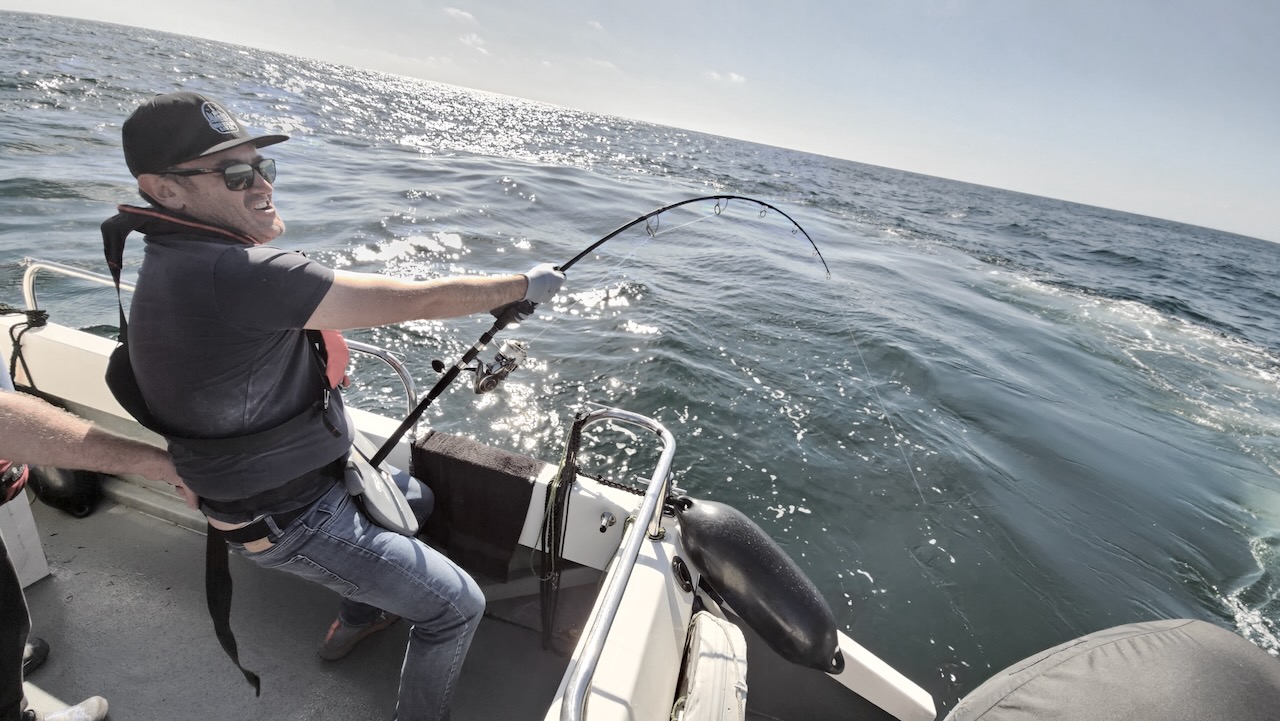
A progressive rod action allows the blank to fold into its mid and lower sections under load. As the angler lifts, the rod stores energy and assists in raising the fish rather than forcing the angler to generate all of the lifting power manually. When the rod is lifted higher the geometry of the system changes and the load experienced by the angler is reduced, allowing pressure to be maintained while conserving energy.
This behaviour becomes critical when fighting large tuna during the pinwheeling phase beneath the boat. As the fish circles vertically, the angler must repeatedly lift and recover line while maintaining steady pressure. A rod with controlled recoil allows the blank to do a large portion of the work, reducing fatigue and allowing the angler to maintain discipline during the most demanding stage of the fight.
Rod selection becomes even more important when targeting larger fish. Some rods that perform well on smaller tuna can “bottom out” when pressure is applied to fish over roughly 80 inches. When a rod bottoms out the blank has flexed to the point where it can no longer store additional energy, leaving the angler to carry the majority of the load. This dramatically increases fatigue and reduces the ability to lift effectively during the final stages of the fight.
A well-designed bluefin casting rod avoids this problem by maintaining structural support deeper into the blank. Instead of collapsing under load, the rod continues to bend progressively while retaining lifting power. This allows anglers to apply sustained pressure while still benefiting from the rod’s recoil during each lifting cycle.
Casting performance must also be considered. Large tuna lures require rods capable of loading efficiently during the cast while remaining stable at high retrieval speeds. A rod that is too heavy or poorly balanced can reduce casting accuracy and increase fatigue over the course of a day spent targeting surface-feeding fish.
Ultimately rod selection should be based on how the entire tackle system performs together. The rod must match the reel’s drag capability, the braid diameter and the angler’s preferred fighting technique. When these elements are aligned the rod becomes an effective pressure tool rather than simply a lifting instrument.
In Atlantic bluefin fishing, balance always outweighs raw stiffness. The most effective rods are those that allow anglers to cast efficiently, maintain steady pressure during the fight and rely on the rod’s progressive bend to assist in lifting the fish during the final stages beneath the boat.
Read more