Your First Bluefin Tuna Trip
What First Time Tuna Anglers Need to Know Before Stepping Offshore
You have spent years reading water. You understand presentation, tackle balance and the discipline of waiting for the right moment. You know what it feels like to be connected to a powerful fish and what it costs when you make the wrong decision under pressure.
None of that is wasted here. But bluefin tuna fishing will ask things of you that no river or stillwater ever has. The fish are bigger, the environment is less forgiving and the method is unlike anything in freshwater. This guide exists to close that gap.
It covers what the UK fishery is, what to expect physically on the water, how stand-up surface casting works and how to prepare properly for your first trip. If you want to see what that first experience actually looks like before reading further, this first-person account from a first-time angler on board Harvest Moon is worth watching first.
What is the UK Bluefin Fishery
Atlantic Bluefin tuna began appearing in UK coastal waters in significant numbers from around 2016, following decades of absence. Their return is the result of sustained conservation effort across the Atlantic and is one of the more remarkable recoveries in recent marine history.
The UK operates a strictly managed catch-and-release recreational fishery under licence from the Marine Management Organisation (MMO). Every vessel targeting bluefin must hold a valid licence. Every fish must be released. Someone on board must have completed mandatory Angling Trust bluefin training for every trip, and handling procedures are tightly regulated to protect fish condition after release.
This is not a fishery built around harvest. It is built around engagement, data collection and the long-term health of the population. That context matters, and it shapes everything about how the fishing is conducted.
The Scale of What you are Dealing With
If you fish for pike, you understand apex predators. If you fish for Atlantic salmon, you understand powerful fish in strong currents. Bluefin tuna are something else entirely and will challenge you physically.
Atlantic Bluefin encountered in UK waters commonly range from 150 to 175 kilograms, with fish exceeding two metres in length recorded regularly later in the season. They are warm-blooded, high-metabolism pelagic predators capable of swimming at speeds exceeding 70 kilometres per hour. When hooked on casting tackle with 18 to 25 kilograms of drag, they do not stop immediately. The first run can strip 200 metres of line in seconds.
The fight is physical in a way that has no freshwater equivalent. It will test your posture, your grip, your legs and your ability to maintain composure under sustained load. Fight times of 20 to 45 minutes are typical for experienced anglers applying disciplined pressure. What surprises most first-timers is not the initial power of the fish — it is how long that power lasts. Tapping out mid-fight and handing the rod to another angler is common on a first trip. There is no shame in it. It is simply an honest measure of what these fish are.
Understanding the scale before you arrive is not meant to discourage. It is meant to prepare.
How the Method Works
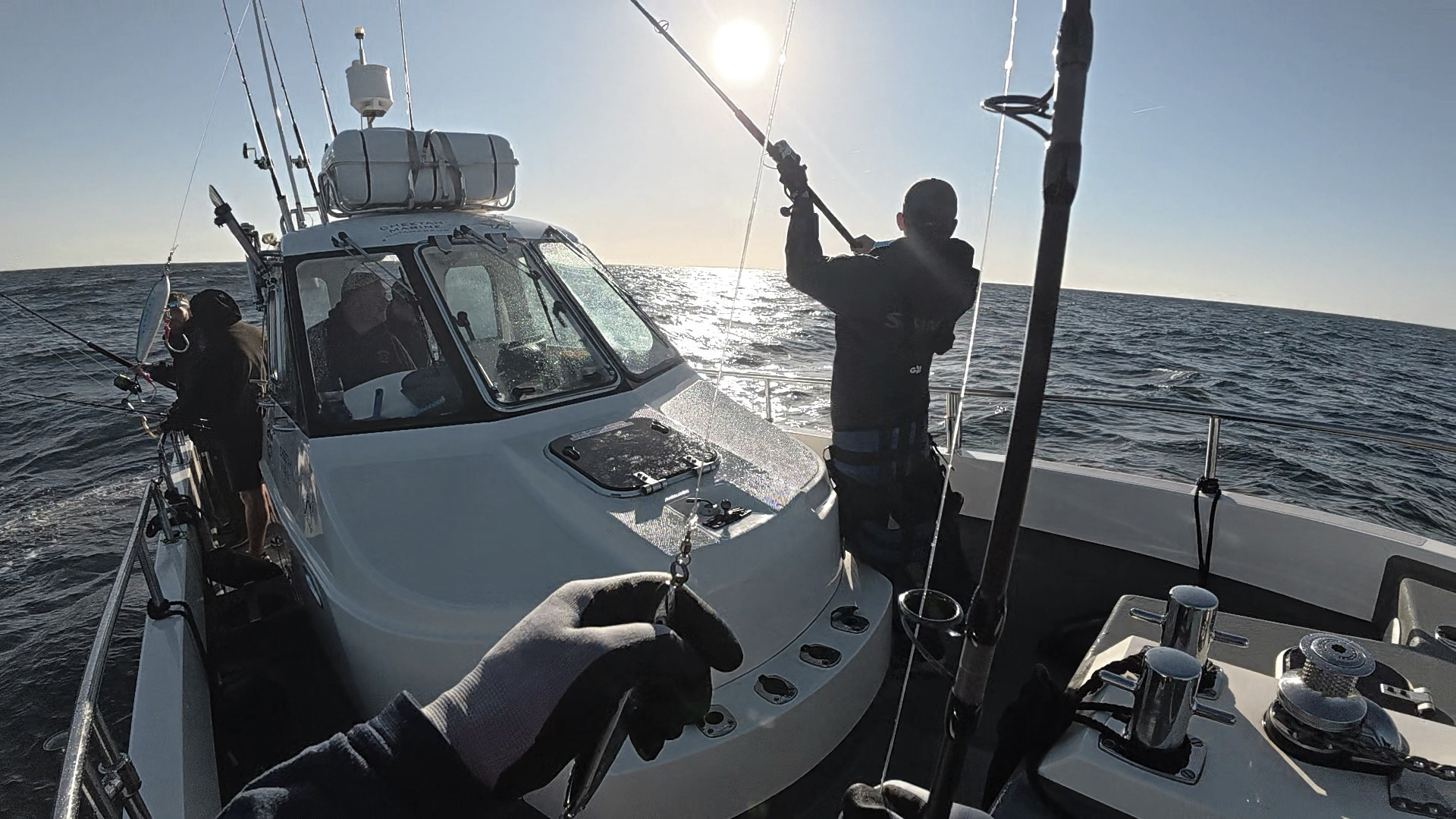
UK bluefin fishing at its best is built around surface casting. Tuna are located pushing baitfish to the surface in large feeding schools. The angler casts artificial lures — typically sinking stickbaits or soft plastic swimmers in the 100 to 150 gram range — directly into the feeding activity.
The connection happens fast. Unlike the measured take of a trout or the slow build of a carp bite, a bluefin strike is immediate and total. The fish is hooked, the drag loads instantly and the fight begins on its terms.
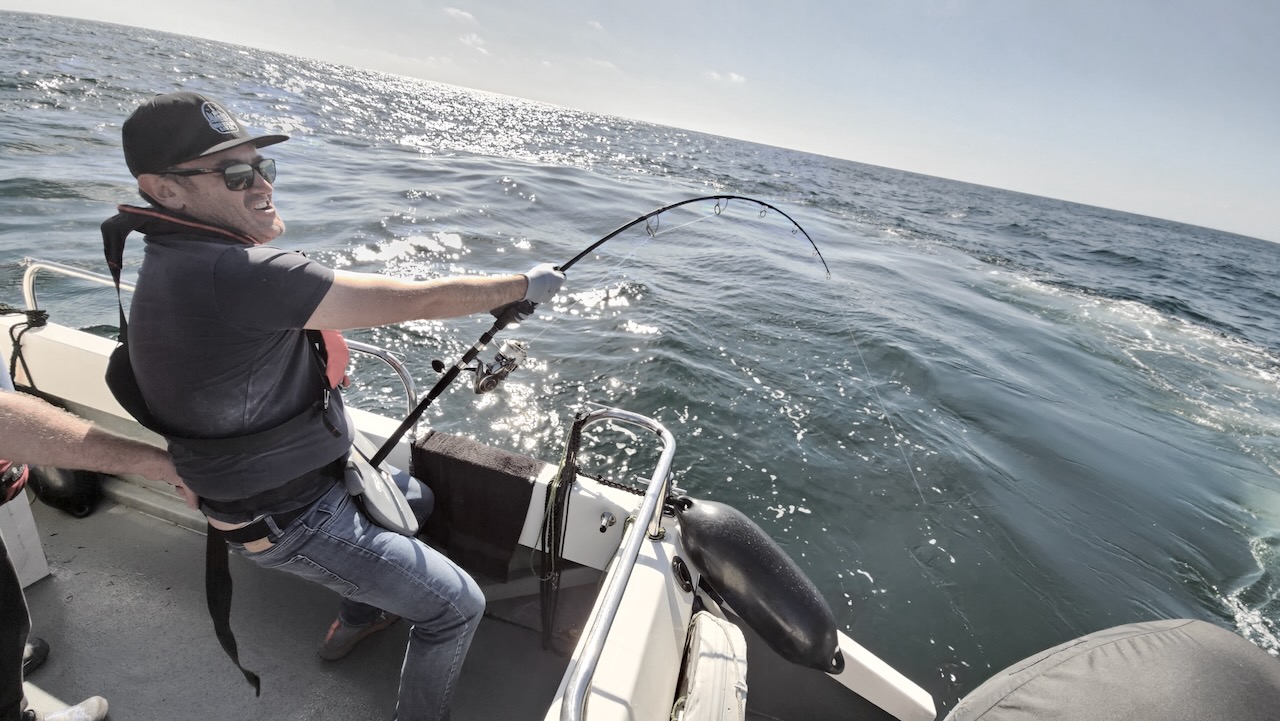
From that point, the angler's job is to apply structured, sustained pressure using the stand-up method. There is no fighting chair. Load is transferred through a gimbal belt to the hips and legs rather than the lower back, allowing the angler to maintain pressure throughout the fight without collapsing posture. The skipper manages boat position around the fish while the angler works the rod.
The objective is a controlled, efficient fight. A shorter battle means a stronger fish at the point of release. That matters in a catch-and-release fishery.
What to Expect on the Day
Getting There
Most UK bluefin charter departures are from harbours in Cornwall, Devon, Dorset and North Yorkshire, with additional vessels operating from Wales. Departure times are typically early — often between 6am and 7am. Passages to the fishing grounds can take one to two hours depending on location and conditions.
Conditions
You will be offshore in open Atlantic water. This is not a lake or a slow river. Conditions change quickly, swell is common and the boats, while purpose-built for stability, move with the sea. If you are susceptible to seasickness, take appropriate precautions the evening before and the morning of departure. Do not wait to see how you feel once you are underway.
The Fishing
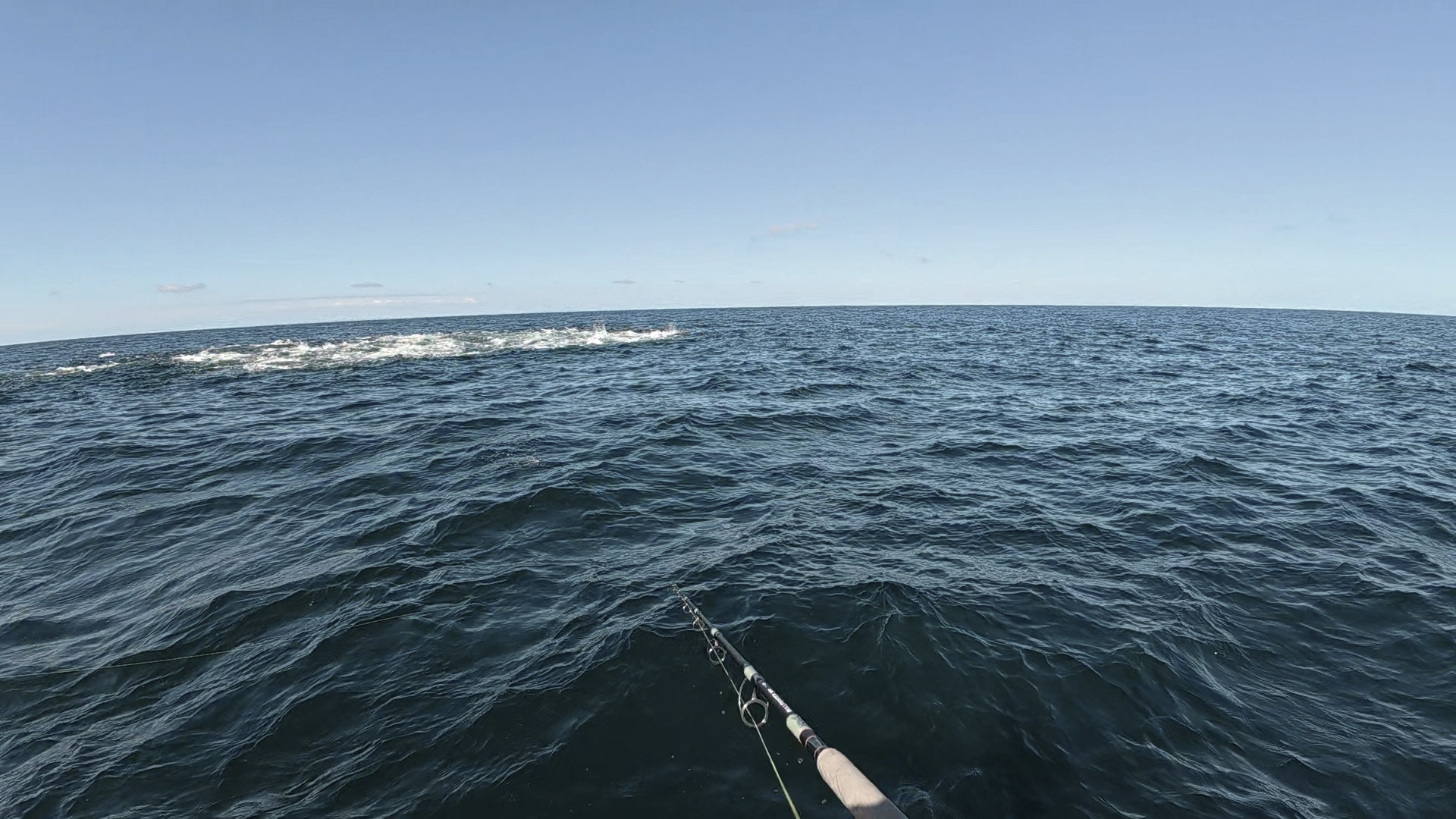
Tuna are located visually — by birds working the surface, by the disturbance of feeding schools and by the skipper's knowledge of the grounds. When fish are found the pace changes immediately. Casting is deliberate and precise. Placement matters. The angler who reads the surface activity and presents the lure accurately will connect more often than one who simply casts into open water.
The Fight
Your skipper will walk you through the stand-up technique before fish are encountered. Listen carefully and follow their guidance exactly. The gimbal position, your foot placement and your posture under load matter far more than strength. First-time anglers who trust their skipper and focus on technique will always outperform those who rely on brute force.
The Release
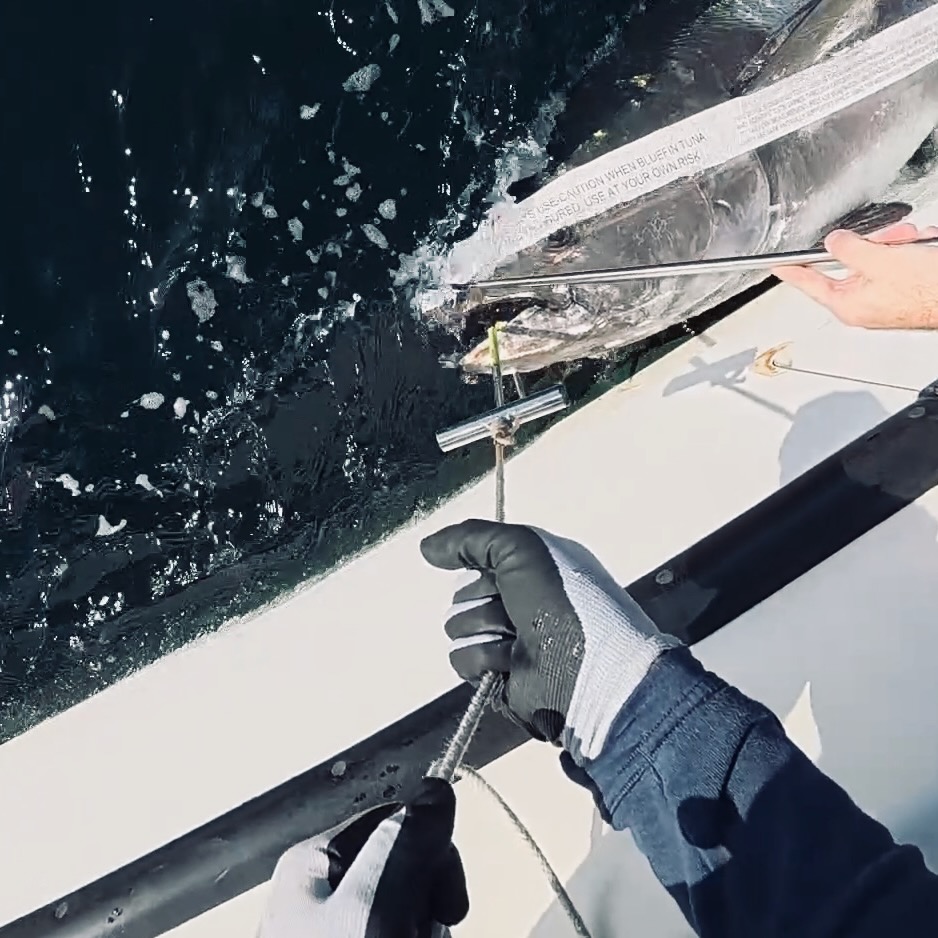
Once the fish is brought to the boat, the skipper handles the release. The fish is not lifted from the water. It is revived alongside the boat until it swims away strongly under its own power. This process is mandatory under MMO regulations and is non-negotiable on every licensed vessel.
How to Prepare
Physical Preparation
Stand-up tuna fishing places sustained load on the core, lower back, hips and forearms. It is not about peak strength — it is about endurance under pressure. In the weeks before your trip, focus on core stability and grip endurance rather than gym output. A few weeks of planks, deadlifts and forearm work will make a measurable difference to how long you can stay on a fish before your technique breaks down.
Tackle
Most licensed charter operators provide rods, reels and lures as part of the trip. Confirm this when booking — do not assume. If you intend to use your own gear, discuss it with your skipper in advance. Equipment must meet specific requirements for this fishery: PE-rated casting rods matched to the reel's drag capability, heavy spinning reels capable of 18 to 25 kilograms of usable drag, and single barbless hooks only. Treble hooks are prohibited under MMO regulations. Arriving with inappropriate tackle wastes everyone's time.
On the Water
Dress in layers appropriate to the month — Atlantic conditions in July and Atlantic conditions in October are not the same thing. Waterproof and windproof outer layers are essential, not optional. Non-slip footwear matters on a moving deck under load. Polarised sunglasses are valuable both for eye protection and for reading surface activity. Bring more water than you think you need.
Mindset
Bluefin tuna are not guaranteed on any given day. The sea does not produce to order and fish location changes with bait, tide and weather. Experienced anglers who arrive with patience, observation and genuine respect for their skipper's knowledge will get significantly more from the experience than those who arrive with fixed expectations. The fishery rewards humility.
Where to Find a Licensed Vessel
All vessels operating in the UK bluefin fishery must hold a current MMO licence. Every licensed charter boat, listed by region from Cornwall to the North East and Wales, is in our bluefin tuna charter boat directory. When choosing a vessel, ask specifically about the skipper's approach — stand-up surface casting and traditional trolling are fundamentally different experiences. If the method described in this guide is what interests you, confirm casting-focused trips are offered before booking.
For a first-person account of exactly what to expect on the water, read one angler's experience of their first UK bluefin trip on board Harvest Moon.
The UK Atlantic Bluefin fishery is one of the most significant sporting fisheries to emerge in British waters in a generation. The standard set now will define what it becomes. Approach it with the same discipline and respect you bring to any serious fishing.
Read more