Tuna & Stand-Up Mechanics
Stand-up tuna fishing relies on controlled load transfer through the angler’s body. When fighting Atlantic bluefin on casting tackle, sustained drag pressure is applied through the rod and reel system. Without proper load distribution this pressure quickly becomes unsustainable, particularly during prolonged fights with large fish.
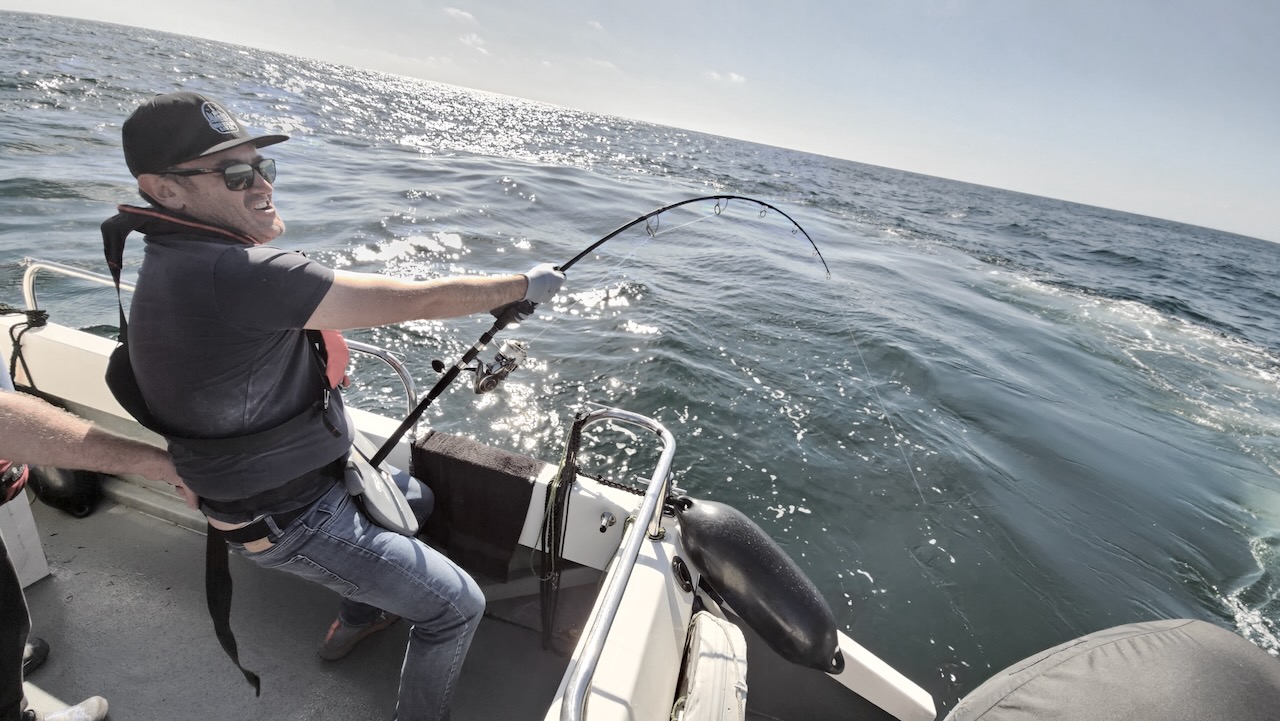
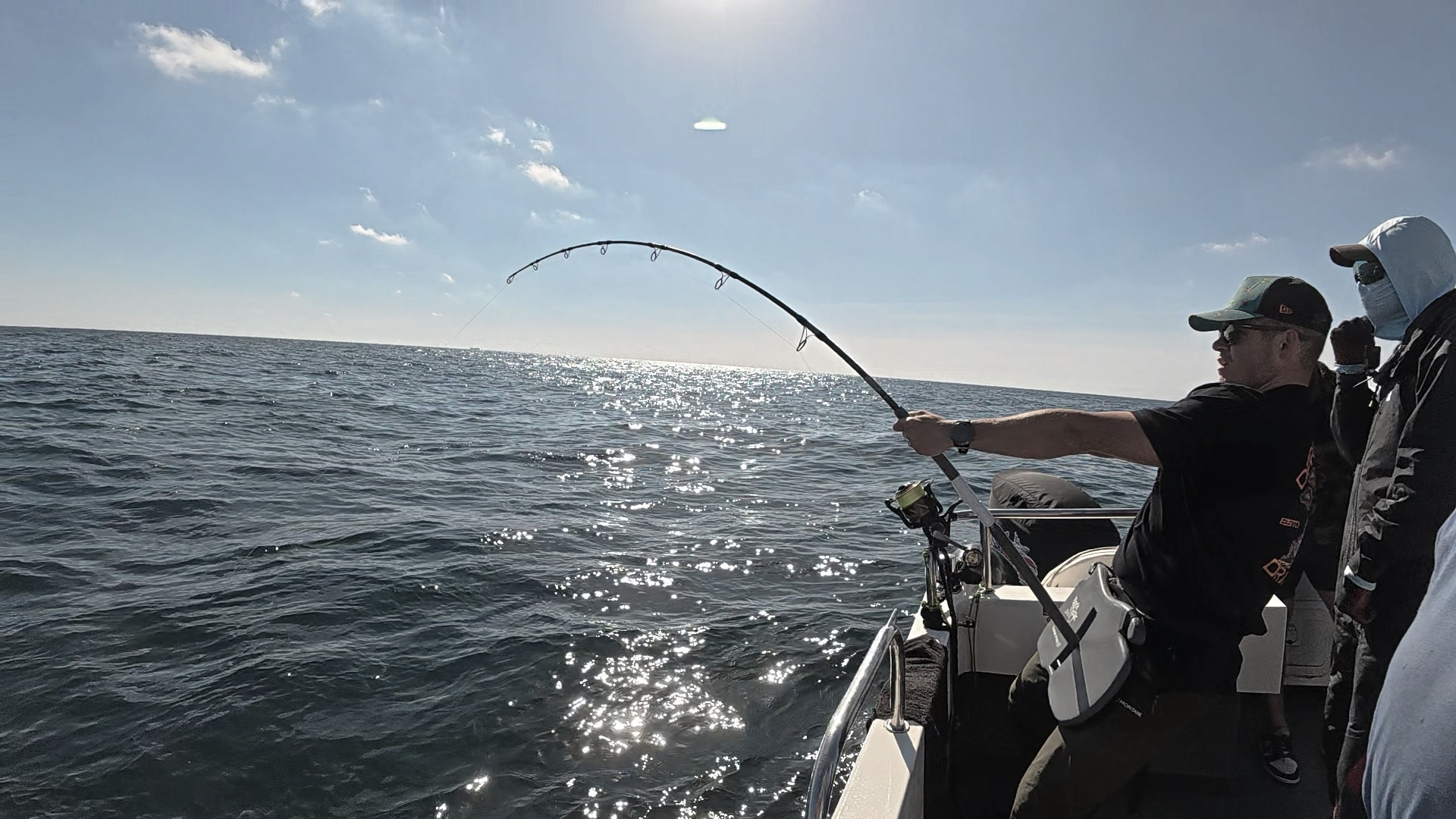
A structured harness or belt system allows this load to be transferred away from the lower back and into the hips and legs, which are far better suited to carrying sustained pressure. When the rod butt is anchored correctly in a gimbal, the angler’s stance becomes part of the pressure system. The legs support the load, the core stabilises posture and the arms control the rod during lifting cycles.
Most anglers fishing stand-up bluefin setups use dedicated waist belts designed specifically for heavy spinning tackle. These belts allow the rod to sit lower on the body than traditional gimbal belts, improving stability and balance under load. Lowering the pivot point of the rod reduces the leverage acting on the angler’s back and allows pressure to be carried more efficiently through the hips and legs.
Belt systems such as the Soul belt and similar designs are commonly used because they allow anglers to engage and disengage the rod from the harness quickly. This flexibility is important during casting and repositioning on the boat, allowing the angler to move freely until the moment sustained pressure is required.
Some systems take this concept further by lowering the gimbal position even more. Belts such as the Maxel harness use straps to position the gimbal pad closer to the knees, which lowers the rod pivot point and increases stability when fighting heavy fish. With the rod anchored lower on the body, the angler can maintain balance more easily while carrying significant drag pressure.
The gimbal pad itself also plays an important role. Many anglers use the widely trusted Black Magic gimbal pads, which provide a simple and effective interface between rod and harness. More specialised systems, such as Pelikatun pads, widen the angler’s stance and help fix knee position, increasing stability during the lifting cycles required when fighting large tuna.
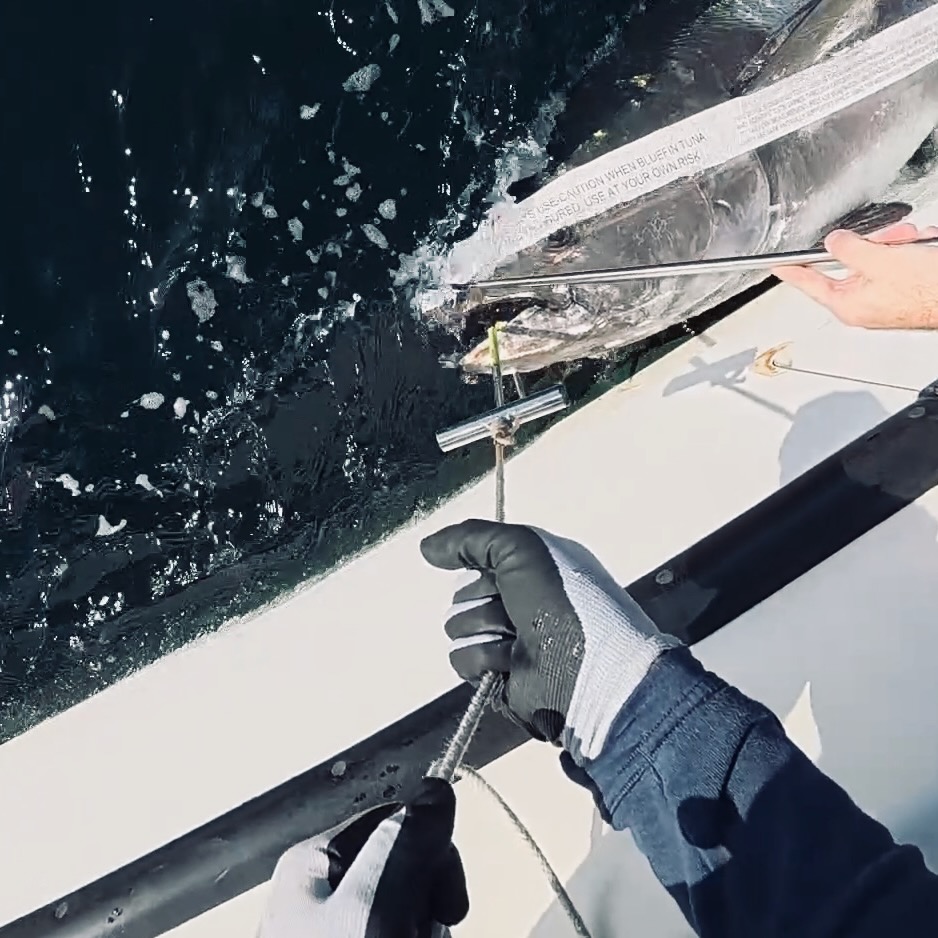
These systems become particularly important during the final stages of the fight. Once the tuna moves beneath the boat and begins circling vertically, the angler must repeatedly lift and recover line while maintaining steady pressure. With the rod anchored through the belt system, much of the load is carried through the hips and legs rather than concentrated in the arms and lower back.
Despite these harness systems, stand-up tuna fishing still places significant demand on the angler’s upper body. The arms and shoulders manage much of the working load during each lift cycle, which is why efficient technique becomes just as important as equipment.
Many experienced anglers adopt a more minimalist approach influenced by Japanese tuna casting techniques. Rather than relying heavily on harness systems, they use simple waist belts and manage fatigue by adjusting rod angles throughout the fight. By lowering the rod slightly during sustained runs and raising it strategically during lifting cycles, pressure can be maintained while reducing unnecessary strain on the arms.
This constant adjustment of rod position allows the angler to remain efficient under load. The rod’s natural bend and recoil assist in lifting the fish while the belt system stabilises the angler’s posture.
Stand-up tuna fishing therefore becomes a coordinated system between angler, harness and tackle. Equipment provides the structural support, but balance and technique determine how effectively pressure can be applied.
When executed correctly, the angler remains upright, stable and capable of maintaining consistent drag pressure throughout the fight. In a discipline where large fish can push both equipment and anglers to their limits, efficient stand-up mechanics often determine how quickly the fight can be brought under control.
Read more