Line Class, PE & Hollow Core
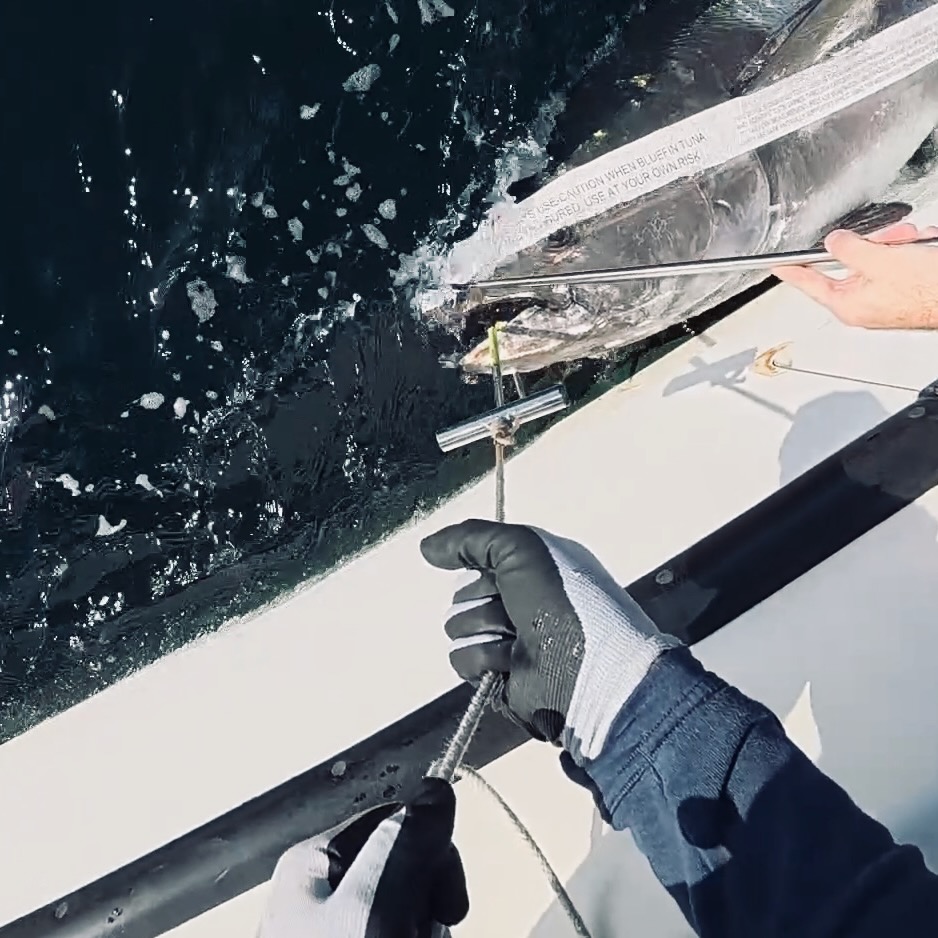
Atlantic Bluefin tuna encountered in UK waters are typically mature fish. Many exceed two metres in length and possess the mass and endurance that have always defined the species. In a fishery that operates almost entirely under catch-and-release regulations, tackle selection carries implications beyond sport. Line strength directly influences the pressure an angler can apply, the length of the fight, and ultimately the condition of the fish at release.
For decades, big-game tackle has been described through the IGFA line class system, originally developed around monofilament line. Classes such as 24 kg (50 lb), 37 kg (80 lb) and 60 kg (130 lb) became the global reference points for tuna fishing and remain the standard for record claims and many traditional tournaments. These classes still provide a useful benchmark for understanding drag pressure and tackle capability.
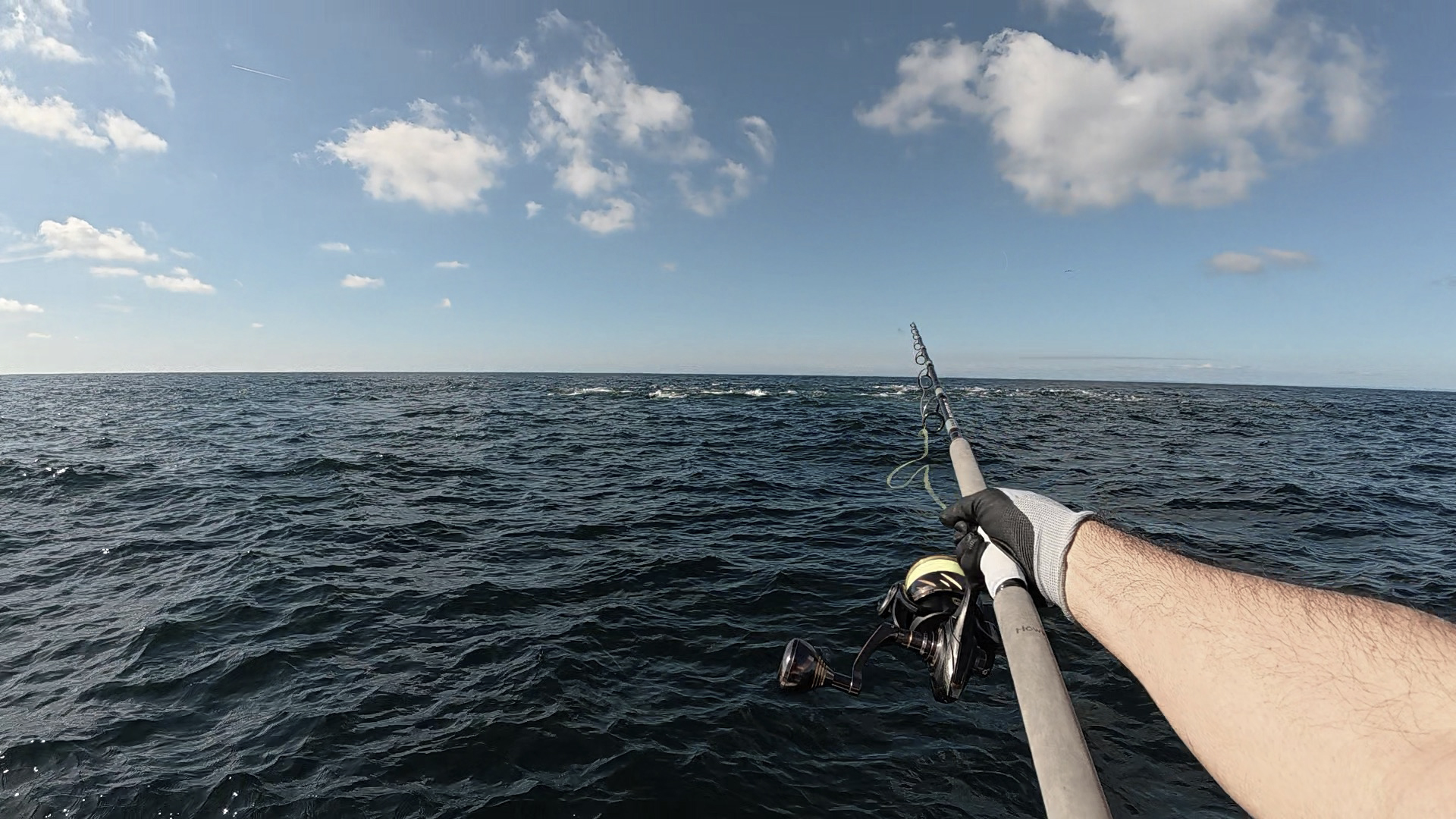
Modern stand-up fisheries, however, increasingly operate outside that mono framework. The widespread adoption of braided line — and particularly hollow core braid — has significantly changed how many anglers approach large tuna.
Braided line carries greater strength for its diameter and transmits pressure far more directly than monofilament. This allows anglers fishing mobile casting gear to apply meaningful drag pressure while maintaining control of the fish. As a result, many modern stand-up Bluefin systems effectively sit within or above the upper traditional mono classes.
A defining feature of many of these systems is the use of hollow core braid rather than solid braid. Hollow construction allows sections of braid to be spliced together, creating extremely strong braid-to-braid connections without relying on conventional knots. This becomes particularly useful when repairing line after break-offs or when constructing loop systems for wind-on leaders.
Wind-on leaders have become standard in many Bluefin fisheries because they allow the leader to pass through the guides and onto the reel during the final stages of the fight. This simplifies leader handling at the boat and allows the crew to maintain control of the fish during the deep circling phase. The terminal leader and hook sections are still tied using traditional knots, but the braid system itself can be rebuilt quickly through splicing when required.
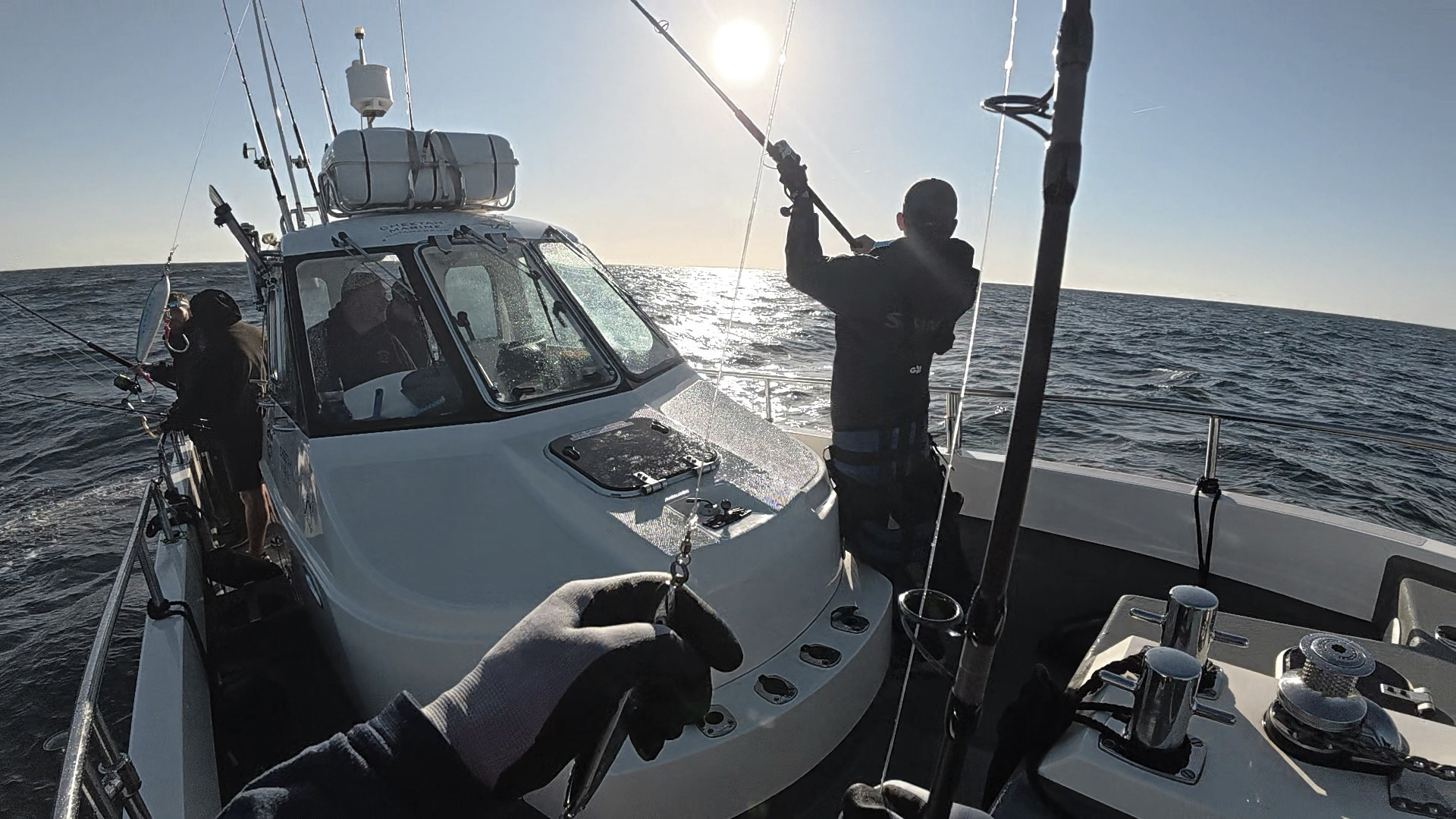
The behaviour of the fish themselves also plays a role in tackle design. When Bluefin are feeding aggressively they often move through bait in dense, fast-moving schools. During a fight it is not unusual for other tuna to cross the line or strike it with their bodies or tails. Break-offs can occur as a result, and over the course of a season anglers may lose sections of line more than once. Hollow core systems make these situations easier to manage, allowing damaged sections to be replaced and leaders reattached without introducing weak knots into the braid.
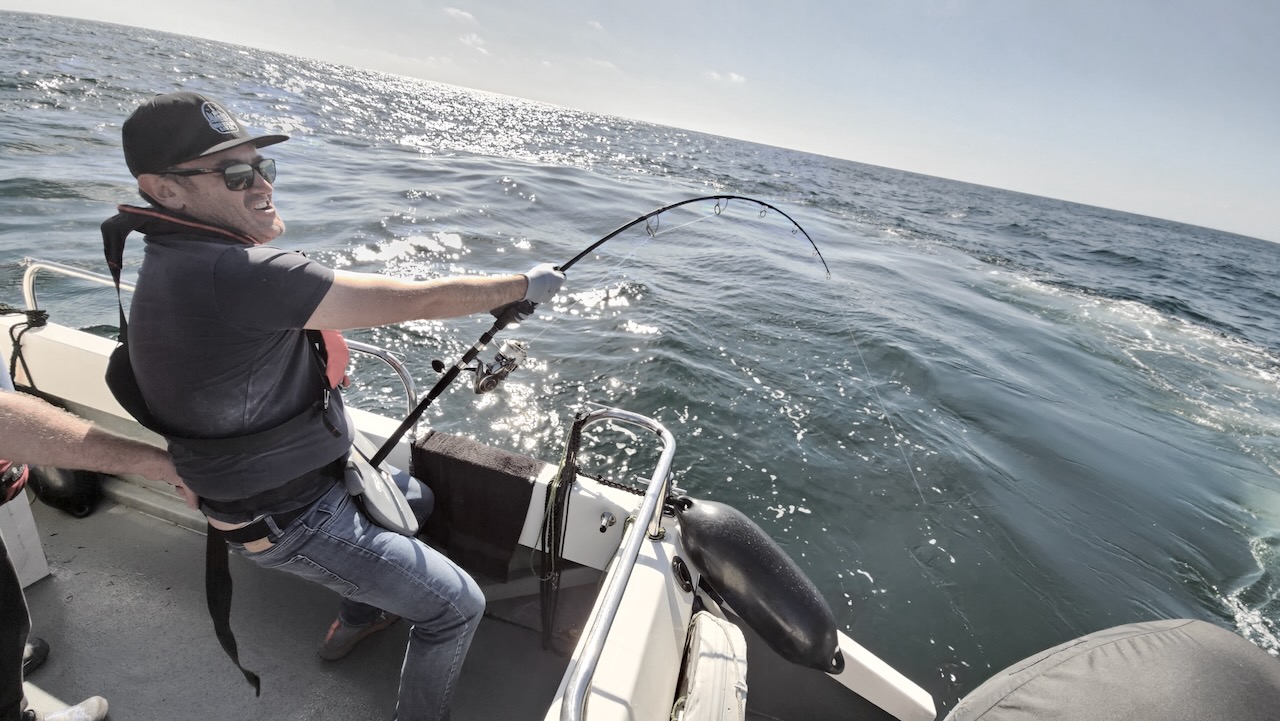
Stand-up fishing places its own demands on line class. Without the mechanical advantage of a fighting chair, the angler must absorb the load through posture, leverage and balance. The rod, drag system and angler’s body function together as a single pressure system. The line must allow enough pressure to control the fish while remaining manageable within the limits of stand-up technique.
Line strength also influences fight duration. Atlantic Bluefin are powerful, high-metabolism fish, and prolonged fights place significant physiological stress on them. In a catch-and-release fishery the objective is not simply to land the fish, but to resolve the engagement efficiently and release it in strong condition.
For this reason many experienced crews favour tackle systems that allow steady, sustained pressure throughout the fight. When the angler, the skipper and the tackle are working together properly, even very large tuna can be controlled without unnecessarily extending the engagement.
In the developing UK Bluefin fishery, line class is therefore not just a specification printed on a spool of line. It forms part of a broader system that includes rod design, drag capability, angler technique and boat positioning. When these elements are aligned, large Bluefin can be brought to the boat efficiently and released in good condition — a balance that increasingly defines modern stand-up tuna fishing.
Read more