Surface Casting for Bluefin
Surface casting has become the defining technique used to target Atlantic bluefin tuna in UK waters. Rather than deploying trolling spreads or drifting natural bait, anglers locate actively feeding fish and cast artificial lures directly into the surface activity. The engagement begins with observation and precision rather than passive presentation.
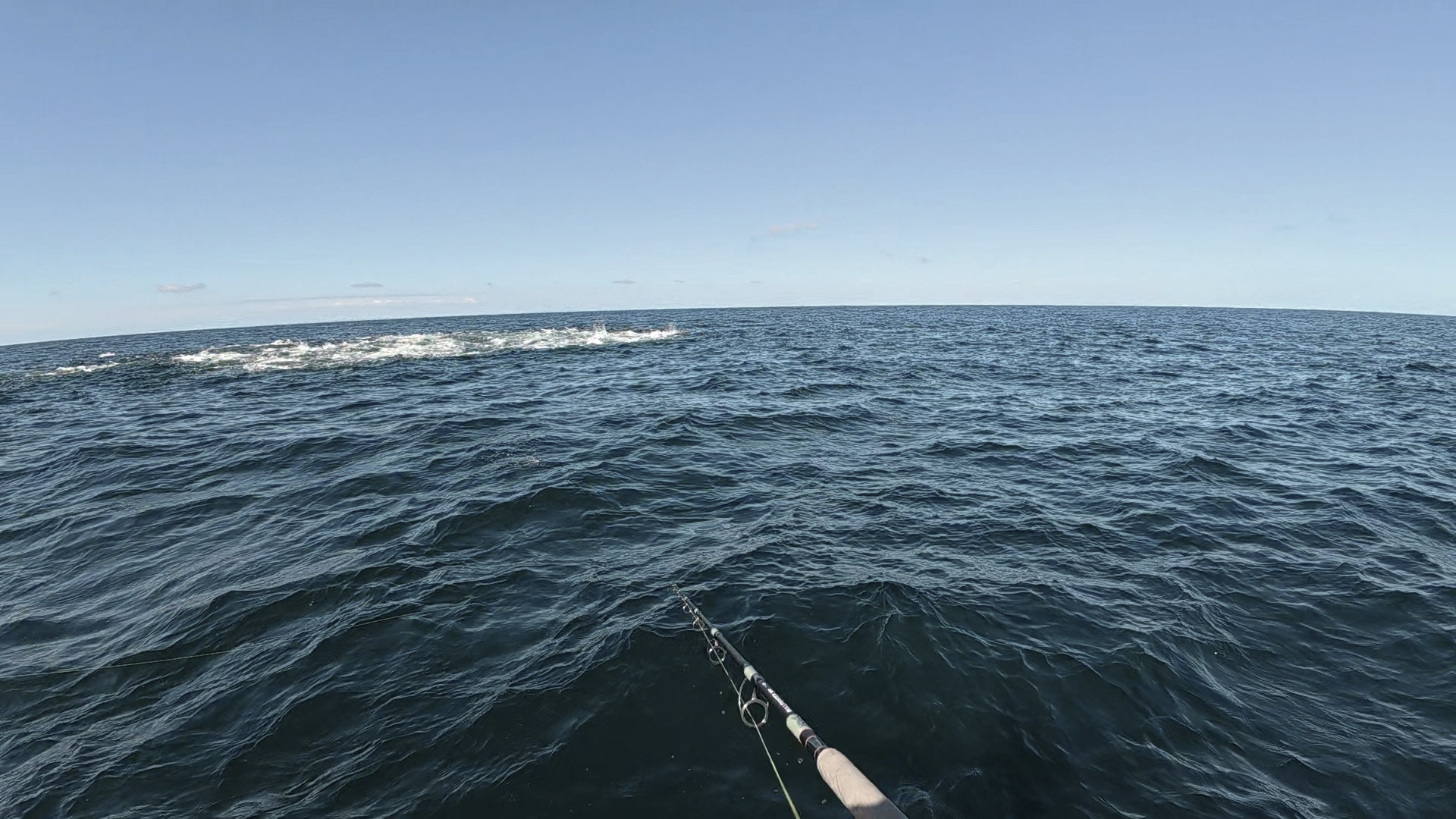
Atlantic bluefin frequently drive baitfish to the surface when feeding. These moments, often referred to as bust-ups, can involve large groups of tuna forcing bait into tight concentrations before striking through them repeatedly. For anglers, this behaviour creates a short window where artificial lures can be presented directly into the feeding zone.
Accurate casting is critical during these moments. When the lure lands within the active feeding area it becomes part of the bait school’s escape pattern, imitating injured or fleeing prey. Because the fish are already feeding aggressively, the response is often immediate. Strikes frequently occur within seconds of the lure landing, and the fish commits to the lure as prey rather than encountering it passively.
Hookups achieved during surface feeding behaviour tend to produce solid hook placement. The fish is already engaged in predatory behaviour and attacks the lure with speed and intent. This allows the angler to begin applying pressure immediately while the skipper responds to the fish’s movement.
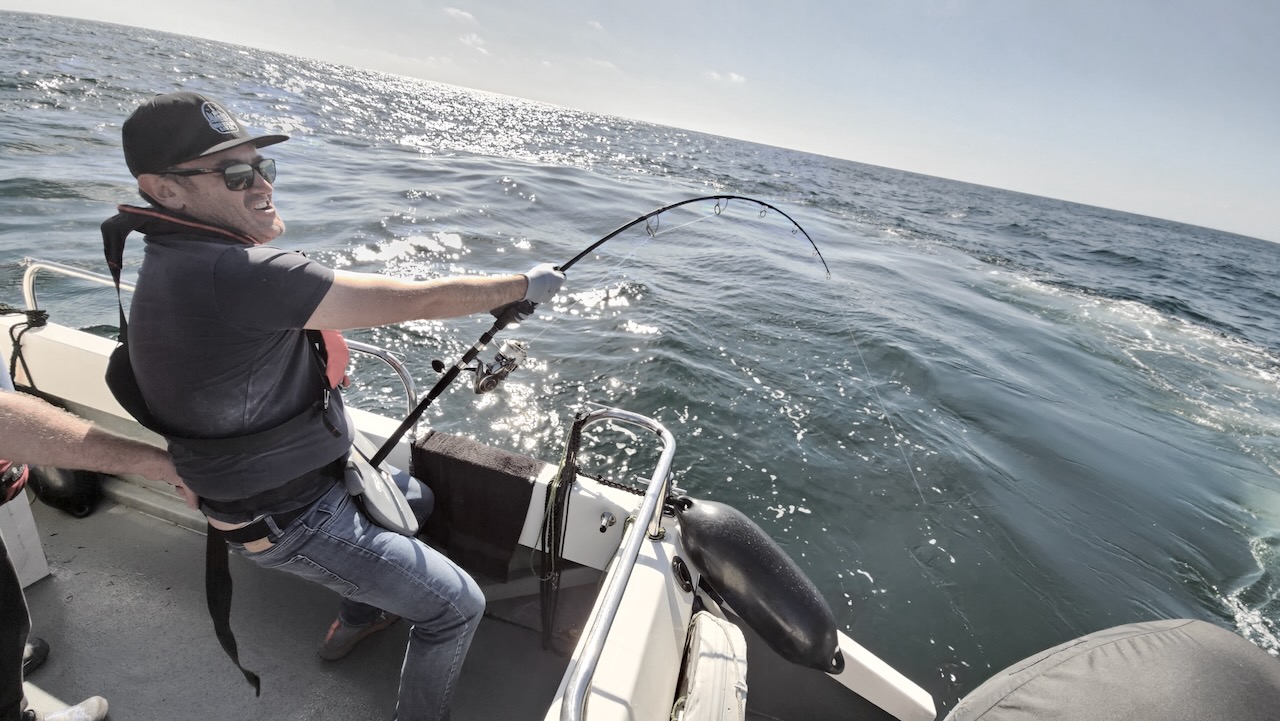
Beginning the fight at the surface also creates a favourable line angle between angler and fish. With the fish hooked near the surface rather than at depth, the angler can apply controlled drag pressure from the start while the skipper positions the boat to follow the tuna’s direction. Maintaining this alignment is essential in bluefin fishing, particularly during the early stages of the fight.
After the hook-up, bluefin tuna typically make powerful horizontal runs and can change direction rapidly while delivering violent head shakes. These surges test both tackle and angler and can quickly remove large amounts of line if the fish is not followed effectively. The skipper plays a crucial role during this stage, manoeuvring the boat to keep the line angle shallow while the angler maintains steady pressure using stand-up technique.
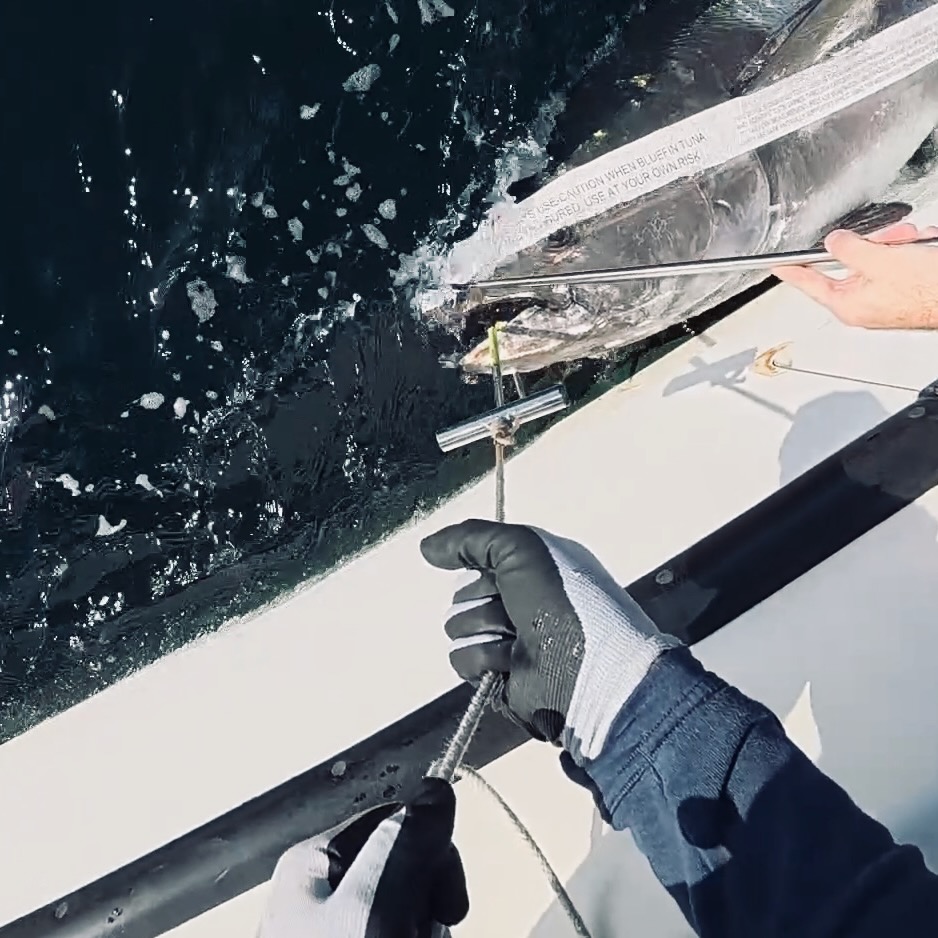
As the fish begins to tire, its behaviour gradually changes. Once brought closer to the boat, bluefin often move deeper beneath the vessel and begin the tight circular patterns commonly referred to as pinwheeling. This phase usually occurs near the end of the fight and requires sustained pressure and careful rod work to guide the fish upward for leadering.
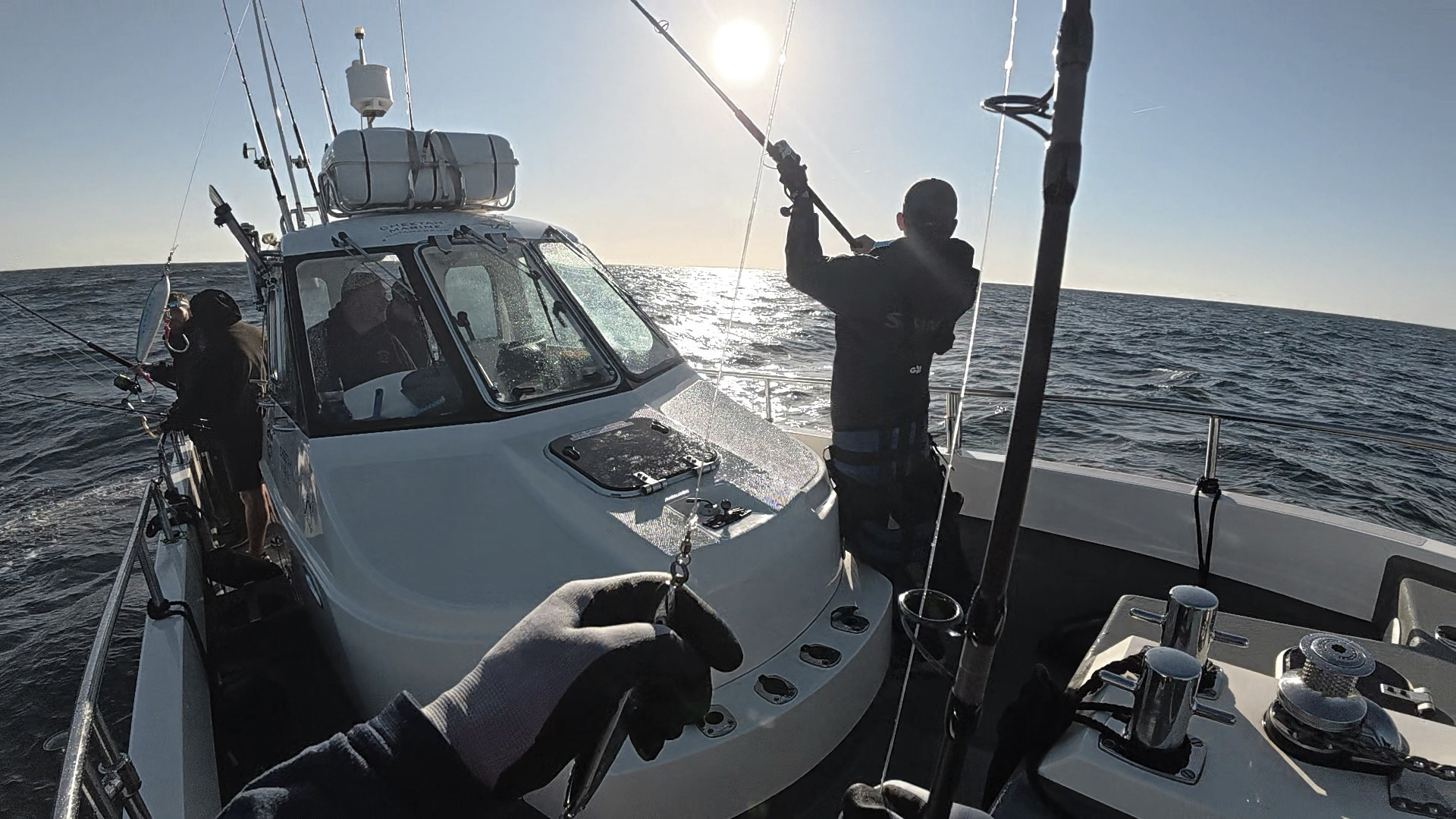
Surface casting also simplifies the dynamic of the engagement itself. Unlike trolling situations where multiple lines may be deployed, casting to surface-feeding fish focuses the effort on a single connection between angler and tuna. Once hooked up, the deck is cleared and the fight becomes a coordinated effort between angler and skipper.
Artificial lure design plays a significant role in this method. Resin stickbaits, wooden surface lures and large soft plastics are commonly used when targeting bluefin in UK waters. These lures must cast efficiently, maintain stable action at high retrieval speeds and withstand the violent strikes and sustained drag pressures generated by large tuna.
Despite the sophistication of modern tackle, the core principle of surface casting remains simple. The angler observes feeding behaviour, places a lure accurately among the fish and retrieves it in a way that mimics distressed bait. When a bluefin commits, the engagement begins instantly and the fight must be managed from the very first run.
For experienced anglers targeting Atlantic bluefin in the United Kingdom, surface casting offers the most direct and engaging way to interact with these fish. The method places the angler at the centre of the feeding event, where observation, timing and precision determine the outcome. When executed correctly, it allows the fight to be structured from the moment of the strike and controlled through every stage of the encounter.
Only a small number of UK charter boats specialise in surface casting. Our bluefin tuna charter boat directory lists every licensed boat by region; ask the skipper which method they fish before you book.
Read more